Paver Repair & Re-Leveling
Repair sunken, uneven, loose and shifted pavers to restore the appearance and function of your existing patio, walkway, driveway or hardscape.
Request A Free EstimateWhen Pavers Start To Shift.
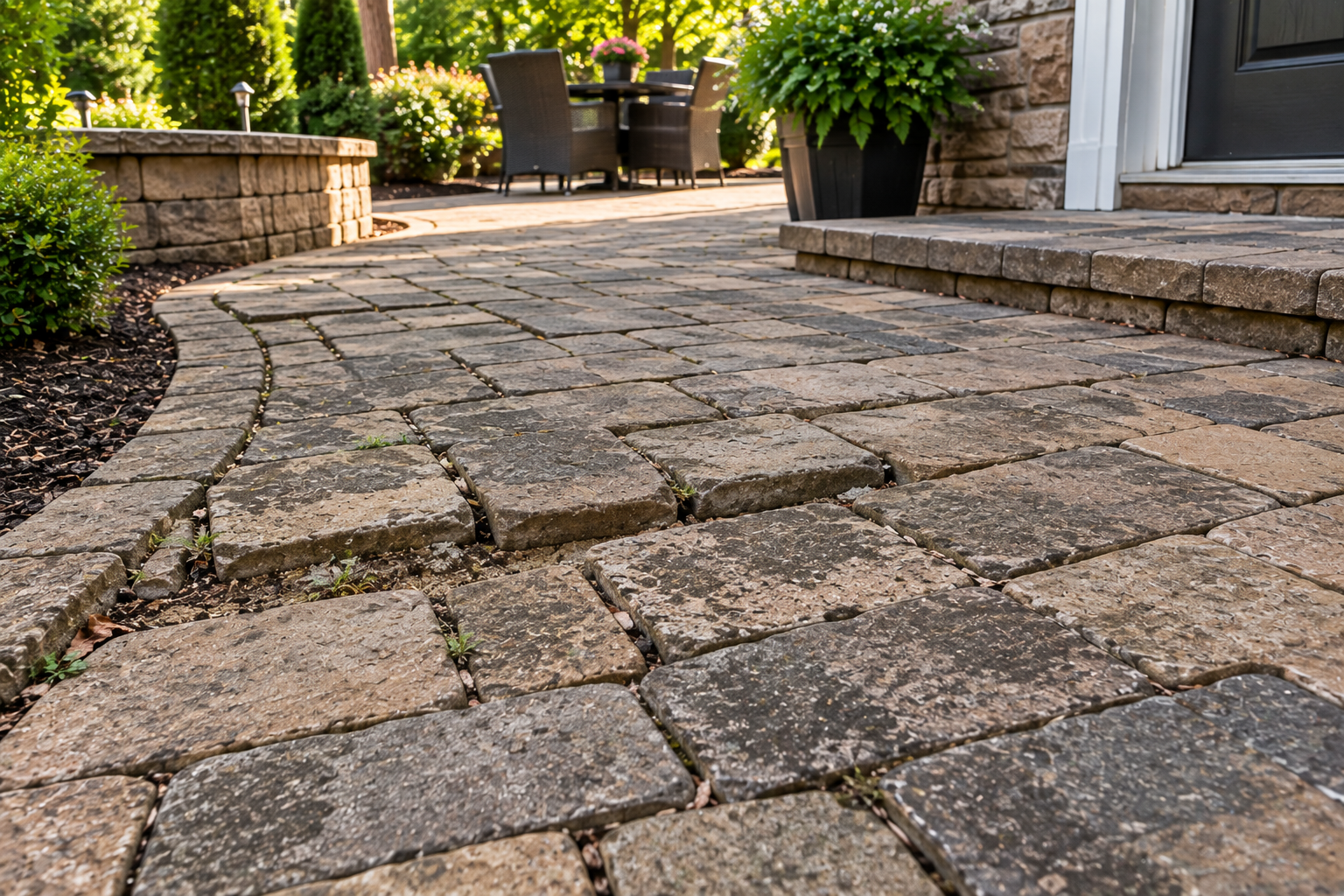
Paver surfaces can change over time. Individual pavers or sections of a hardscape may begin to settle, shift, loosen or become uneven, leaving an area that no longer looks or functions the way it once did.
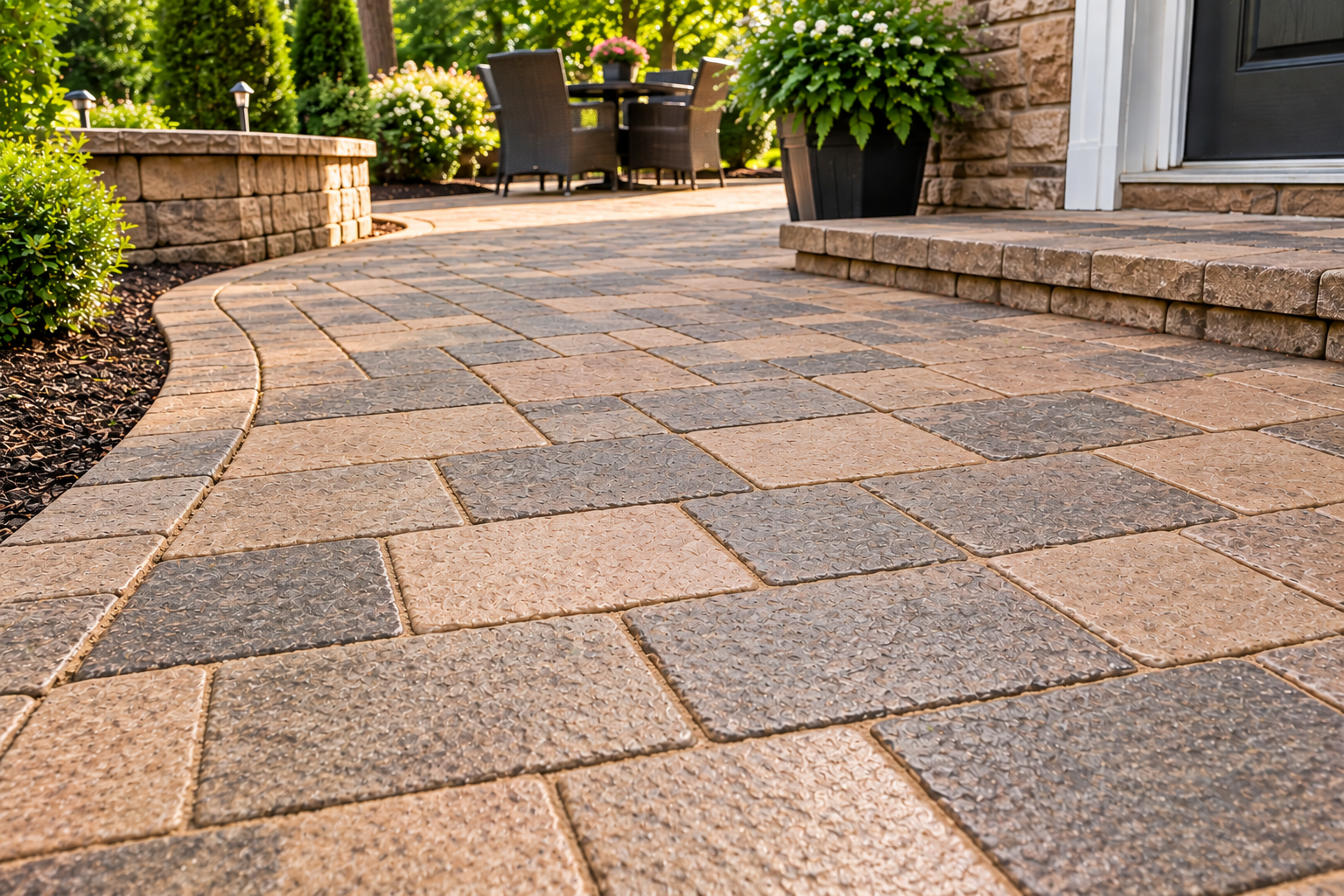
The good news is that a problem area does not automatically mean the entire hardscape needs to be replaced. Depending on the condition of the existing surface, targeted paver repair and re-leveling may allow the affected area to be corrected while keeping the surrounding hardscape in place.
Fix The Problem Area. Keep The Hardscape.
ACE focuses on the condition of the existing pavers and the area around them. When repair is appropriate, the goal is to address the affected section rather than assuming an otherwise usable hardscape needs complete replacement.
Signs Your Pavers May Need Repair.
Sunken Pavers
Individual pavers or larger sections can settle lower than the surrounding surface, creating noticeable dips or changes in elevation.
Uneven Surfaces
When neighboring pavers no longer sit at a similar height, the hardscape can develop raised edges, dips and an inconsistent walking surface.
Loose Pavers
Pavers that rock, move or feel unstable underfoot may need to be reset rather than simply left to continue moving within the surface.
Shifted Pavers
Pavers can move out of their original alignment, leaving uneven spacing, crooked lines or areas that no longer fit together as intended.
Low Spots
Depressed sections of a paver surface may become visually noticeable and can allow water to collect in areas where the surrounding pavers sit higher.
Failing Or Open Joints
Wider gaps, missing joint material or changes between neighboring pavers can be signs that an area should be evaluated along with the condition of the surrounding surface.
What Causes Pavers To Become Uneven?
Settling Beneath The Pavers
Changes beneath a paver surface can allow sections to settle lower than the surrounding area. The result may appear as isolated sunken pavers, dips or larger uneven sections.
Water Movement & Erosion
The way water moves around or beneath a hardscape can sometimes contribute to changes in the supporting material and the position of the pavers above it.
Joint Material Loss
When material between neighboring pavers becomes depleted or joints begin to open, the surface may have less support between individual units and should be evaluated along with the surrounding area.
Repeated Use & Traffic
Areas that regularly experience foot traffic, vehicles or other repeated use can change over time. The amount and type of use can be one factor considered when evaluating a problem area.
Edge Movement
Movement near the outside edge of a paver area can affect alignment and spacing. Pavers may begin to spread, shift or sit differently than neighboring sections.
Changes Over Time
Outdoor hardscapes are exposed to weather, moisture, use and changing conditions year after year. Sometimes uneven areas develop gradually rather than from one single event.
The ACE Repair & Re-Leveling Process.
Every paver problem is a little different. ACE starts by looking at the affected area and the condition of the existing hardscape, then determines what work is appropriate for that particular surface.
Assess
ACE begins by evaluating the affected pavers and surrounding surface to understand where movement, settling or uneven areas are present.
Access The Area
When appropriate for the repair, affected pavers may be carefully lifted or removed so the area beneath them can be reached and evaluated.
Correct & Re-Level
The affected area is addressed as needed to establish a more appropriate level for the pavers being repaired. The exact work depends on the condition found during evaluation.
Reset The Pavers
Existing pavers are reset where appropriate, with attention given to their position, alignment and relationship to the surrounding hardscape.
Re-Sand & Finish
Joint material and finishing work can be addressed as appropriate for the repaired area and the overall condition of the existing paver surface.
Repair The Problem. Keep The Hardscape.
Paver Repair vs. Full Restoration.
Repair and restoration can overlap, but they are not always the same job. The condition of the existing hardscape helps determine whether the focus should be on a specific physical problem or a broader combination of services.
Paver Repair &
Re-Leveling
Repair and re-leveling focus primarily on physical problem areas within an existing paver surface. The work is centered on the sections that have become uneven, loose, sunken or shifted.
- Sunken pavers
- Uneven sections
- Loose or shifted pavers
- Localized low spots
- Areas that may need resetting or re-leveling
Hardscape
Restoration
Restoration takes a broader look at the condition of the hardscape. Depending on what the existing surface needs, a restoration project may involve several different services rather than one isolated repair.
- Cleaning and surface preparation
- Paver repair where needed
- Re-leveling affected areas
- Joint re-sanding where appropriate
- Sealing and protection where appropriate
You do not need to diagnose the problem before contacting ACE. The existing pavers and affected areas can be evaluated to determine whether the project calls for targeted repair and re-leveling or a broader hardscape restoration approach.
Explore Hardscape RestorationWhere Paver Repair May Be Needed.
Patios
Sunken, loose or uneven areas can interrupt the appearance and consistency of an existing paver patio. Targeted repair may allow the affected section to be addressed while preserving the surrounding patio.
Walkways
Individual pavers or sections of a walkway can settle or shift over time, creating changes in elevation, alignment or spacing that may benefit from repair and re-leveling.
Driveways
Paver driveways can develop localized settling, movement or uneven sections. ACE can evaluate the affected area and determine whether targeted repair is appropriate for the existing surface.
Steps & Hardscape Areas
Paver areas around steps, transitions and other hardscape features can also experience movement or changes in elevation. The surrounding construction and condition of the area help determine what type of repair may be appropriate.
Other Existing Paver Surfaces
Not every paver installation fits neatly into one category. If an existing paver surface has become sunken, uneven, loose or shifted, ACE can evaluate the area to determine what repair options may make sense.
What Happens After The Repair?
Cleaning
If the surrounding pavers have accumulated dirt, organic buildup or general outdoor wear, cleaning may be considered separately from the physical repair itself.
Joint Re-Sanding
Depending on the repaired area and the condition of the surrounding joints, joint material may need to be addressed as part of finishing the surface or a broader restoration service.
Sealing
When appropriate for the existing pavers and their condition, sealing can be considered after the necessary preparation to add protection and help maintain the finished surface.
Ongoing Maintenance
Once the hardscape is in good condition, recurring paver maintenance can help stay ahead of routine dirt, buildup and everyday outdoor exposure.
Not every repaired surface needs every additional service. ACE can evaluate the overall condition of the pavers and determine whether cleaning and sealing or recurring maintenance makes sense after the repair work is complete.
Paver Repair & Re-Leveling FAQ.
Every paver surface is different. These answers cover some of the most common questions about repairing sunken, uneven, loose and shifted pavers.
01
Can sunken pavers be repaired?
02
Why are my pavers becoming uneven?
03
Do you have to replace the entire patio?
04
Can loose pavers be reset?
05
Can you match existing pavers?
06
What happens if you find a larger underlying problem?
Fix The Problem Before It Gets Worse.
If your pavers are sunken, uneven, loose or shifted, ACE can evaluate the affected area and determine what repair and re-leveling approach may be appropriate for your existing hardscape.
Request A Free Estimate